

A venous duplex ultrasound is a noninvasive imaging test that uses sound waves to show your leg veins and the direction blood is flowing through them. Doctors use it to look for clots, blocked veins and valves that no longer work, a problem tied to varicose veins. It uses no radiation and no needles. If you are wondering whether you need one, a free vein screening is a good place to start.
Quick Summary
- What it is: an ultrasound scan of the veins that adds Doppler, a technique that shows blood moving through the vessels.
- What it can find: blood clots, blocked veins, and damaged valves that let blood flow the wrong way (reflux).
- What it feels like: the technologist moves a gel-covered probe over your skin. RadiologyInfo.org says an ultrasound should not be painful, but MedlinePlus notes that pressing on a vein can cause slight pain.
- Preparation: little or no special preparation, according to RadiologyInfo.org. Wear loose, comfortable clothing.
- Limits: deep veins and small calf veins can be hard to see, and image quality depends on the skill of the person doing the scan.
- Urgent signs: chest pain, trouble breathing, coughing up blood or fainting need emergency care, with or without leg symptoms. Leg pain, swelling, redness and warmth that could mean a clot need a call to a doctor right away.
- This article is general information and does not replace an in-person medical evaluation.
What is a venous duplex ultrasound?
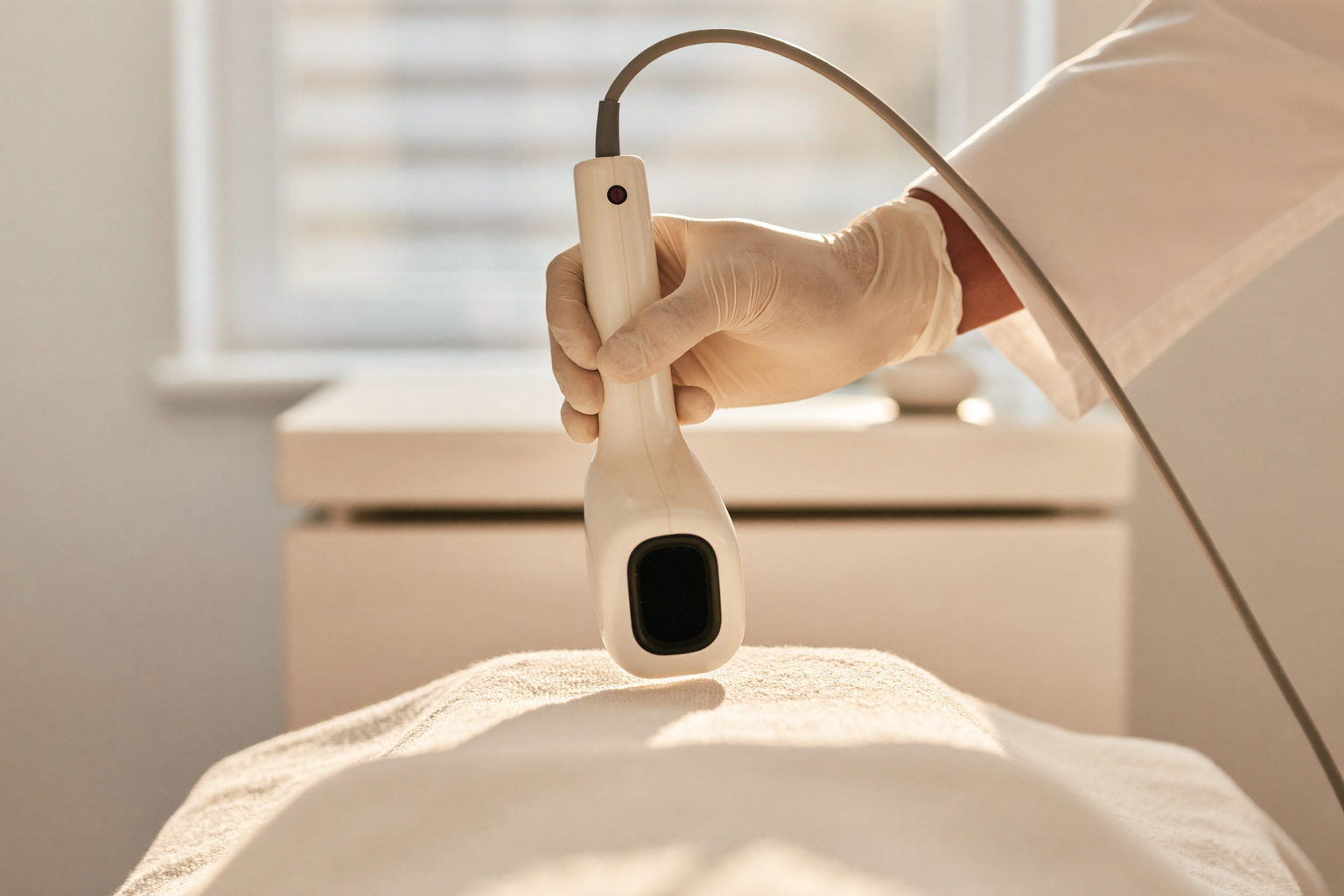
A venous duplex ultrasound is a vein ultrasound that combines two views: a picture of the vein itself and a Doppler reading of the blood moving inside it. The National Health Service (NHS) in England describes duplex ultrasound as a type of scan that checks your blood flow, and says specialists usually use it to confirm varicose veins and plan treatment.
The test uses a small probe called a transducer and a water-based gel placed on the skin. High-frequency sound waves travel into the body, bounce back and are turned into an image. RadiologyInfo.org, a patient site run by the American College of Radiology and the Radiological Society of North America, says ultrasound does not use radiation, shows the body in real time, and can show blood flowing through blood vessels.
What does a venous duplex ultrasound show?
It answers a few specific questions about the veins in your legs. According to RadiologyInfo.org and MedlinePlus, a venous ultrasound can help show:
- Blood clots, including deep vein thrombosis (DVT). This is the most common reason doctors order a venous ultrasound.
- Venous reflux, which is blood flowing the wrong way because vein valves are damaged or weak. RadiologyInfo.org says the test can identify damaged valves and abnormal blood flow in people with varicose veins.
- Venous insufficiency and closed or blocked veins, which MedlinePlus lists among the conditions the test helps diagnose.
- A cause for long-standing leg swelling, which RadiologyInfo.org lists as another reason to scan the veins.
Our vein disorders page lists "duplex ultrasound for reflux and mapping" as part of how the practice diagnoses vein conditions, and our varicose vein treatment page lists ultrasound mapping to identify incompetent valves and guide treatment decisions.
Why isn't looking at your legs enough?
A visual exam shows what is on the surface: bulging veins, swelling, skin changes. It cannot show which way blood is moving in the veins below the skin. An ultrasound adds that picture, which is why, when indicated, a duplex ultrasound can follow the clinical history and standing visual exam of the veins described on our vein disorders page.
Not every visit includes a scan. Our free vein screening includes a medical history, a physical exam of the veins and Doppler ultrasound "when indicated," and the screening page says an ultrasound may be recommended when reflux is suspected. Your physician decides whether a scan is needed for you.
How do you prepare for a venous ultrasound?

Little or no special preparation is required, according to RadiologyInfo.org. It suggests:
- Leave jewelry at home.
- Wear loose, comfortable clothing.
- Expect that you may be asked to wear a gown.
- Follow any specific instructions from the office. On occasion, patients are asked not to eat or drink anything but water for six to eight hours beforehand.
MedlinePlus notes that you will need to remove clothing from the leg being examined. Ask the office when you book whether anything special applies to your scan.
What happens during the exam?
Here is the general process described by RadiologyInfo.org and MedlinePlus:
- A gel is applied to the skin over the area being scanned.
- A handheld transducer is moved over the skin, and sound waves create images on a screen in real time.
- The person performing the test may press on a vein to check whether it holds a clot. Some people feel slight pain or discomfort from that pressure.
There are no needles, injections or contrast dye, and no radiation. RadiologyInfo.org says an ultrasound exam may occasionally be temporarily uncomfortable but should not be painful, and MedlinePlus says pressure on a vein can cause slight pain. If you feel pain during the scan, tell the person performing it.
What are the limits of a venous ultrasound?
No test sees everything. RadiologyInfo.org lists these limits:
- Veins that lie deep beneath the skin, especially small veins in the calf, may be hard to see.
- Veins deep in the pelvis and abdomen are difficult to see with ultrasound. If a clot is suspected there, a different imaging test such as CT or MRI may be needed.
- Image quality depends more on the skill and experience of the person performing the exam than it does with CT or MRI.
- Depending on how much of the leg is covered, your doctor may ask for a second ultrasound in about a week if a clot is a concern.
If your scan is normal but your symptoms continue or get worse, RadiologyInfo.org advises telling your doctor.
How do you get the results?
In a typical imaging setting, RadiologyInfo.org says, a radiologist (a doctor trained to read imaging) analyzes the images and sends a signed report to the doctor who requested the exam, and that doctor then shares the results with you. Ask the office how the results will reach you and when, and what the next step would be if the scan shows reflux, a clot or a normal result.
When is leg pain or swelling an emergency?
Chest pain, trouble breathing, coughing up blood or fainting are emergency signs on their own. Go to the emergency room or call 911 right away, even if you have no leg pain or swelling, because a clot that travels to the lungs can cause these signs without obvious leg symptoms.
A clot in a deep vein also needs prompt medical attention. MedlinePlus lists swelling, pain or tenderness, redness and warmth in one leg as symptoms of DVT. If you think you may have a clot, contact a doctor right away. Do not wait for a routine appointment. Our guide to deep vein thrombosis symptoms and when to see a specialist explains the warning signs in more detail.
MedlinePlus advises going to the emergency room or calling 911 for these signs. The NHS gives the same warning about chest pain and shortness of breath alongside DVT symptoms, because a clot can travel to the lungs.
Leg swelling that lingers without those warning signs is still worth having checked. See our guide to leg swelling and vein disease for how swelling and vein problems can be connected.
What should you ask before the scan?
A short list of questions can make the visit easier:
- What question is this scan meant to answer: a clot, reflux or both?
- Does it cover one leg or both?
- Do I need to prepare in any way?
- Who will perform the scan, and who will read it?
- When will I get the results, and who will explain them?
- What are the next steps if the scan shows reflux or a clot?
Frequently Asked Questions
Is a venous duplex ultrasound painful?
It should not be, according to RadiologyInfo.org, which says an ultrasound exam may occasionally be temporarily uncomfortable. MedlinePlus notes that pressing on the vein can cause slight pain, so it is not guaranteed to be pain-free. Tell the person performing the test if anything hurts.
Does a venous ultrasound use radiation or dye?
No. Standard diagnostic ultrasound uses sound waves, not radiation, and venous ultrasound does not require contrast material, according to RadiologyInfo.org.
Can an ultrasound find a blood clot in the leg?
Yes. Finding clots, especially deep vein thrombosis in the leg, is the most common reason for a venous ultrasound, according to RadiologyInfo.org. It is very accurate for clots in the larger veins of the thigh and behind the knee, and less accurate in the smaller calf veins.
Will I need an ultrasound before vein treatment?
Usually. The NHS says specialists usually do a duplex ultrasound to confirm varicose veins and plan treatment, and our varicose vein treatment process includes ultrasound mapping to guide decisions. Whether you need one depends on your symptoms and exam, and your physician will explain why.
Book a Free Vein Screening in New York
If you have leg aching, swelling or visible veins and want to know what is behind them, start with a Free Vein Screening. One of our physicians will review your history, examine your veins and talk through your options, with no obligation.
- Manhattan: 212.987.0500
- Manhasset: 516.482.4477
- Commack: 631.543.4599
This article is educational and does not replace an in-person medical evaluation.
Related Treatment Resources
- Understanding varicose veins: symptoms and when to seek treatment
- Deep vein thrombosis symptoms and when to see a specialist
- Leg swelling and vein disease in New York
Sources
- RadiologyInfo.org (American College of Radiology and Radiological Society of North America), "Venous Ultrasound" (last reviewed July 15, 2026): radiologyinfo.org
- MedlinePlus (National Library of Medicine, NIH), "Doppler ultrasound exam of an arm or leg" (review date January 13, 2026): medlineplus.gov
- MedlinePlus, "Deep vein thrombosis" (review date April 1, 2025): medlineplus.gov
- NHS, "Varicose veins" (page last reviewed July 1, 2024): nhs.uk
- NHS, "DVT (deep vein thrombosis)" (page last reviewed April 30, 2026): nhs.uk
Need Personalized Vein Care?
Schedule a physician-led evaluation and review treatment options tailored to your symptoms and goals.