What Are Varicose Veins?
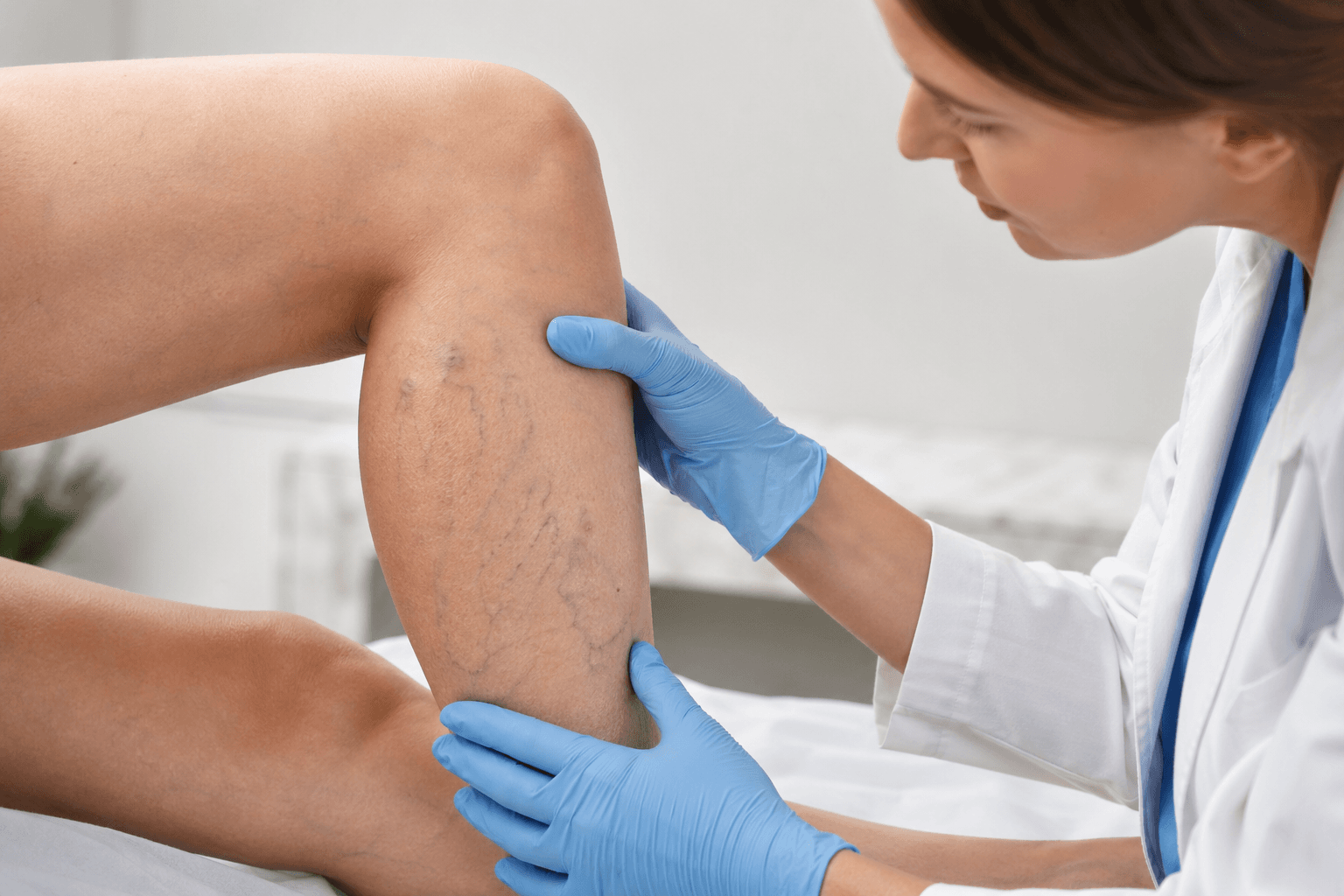
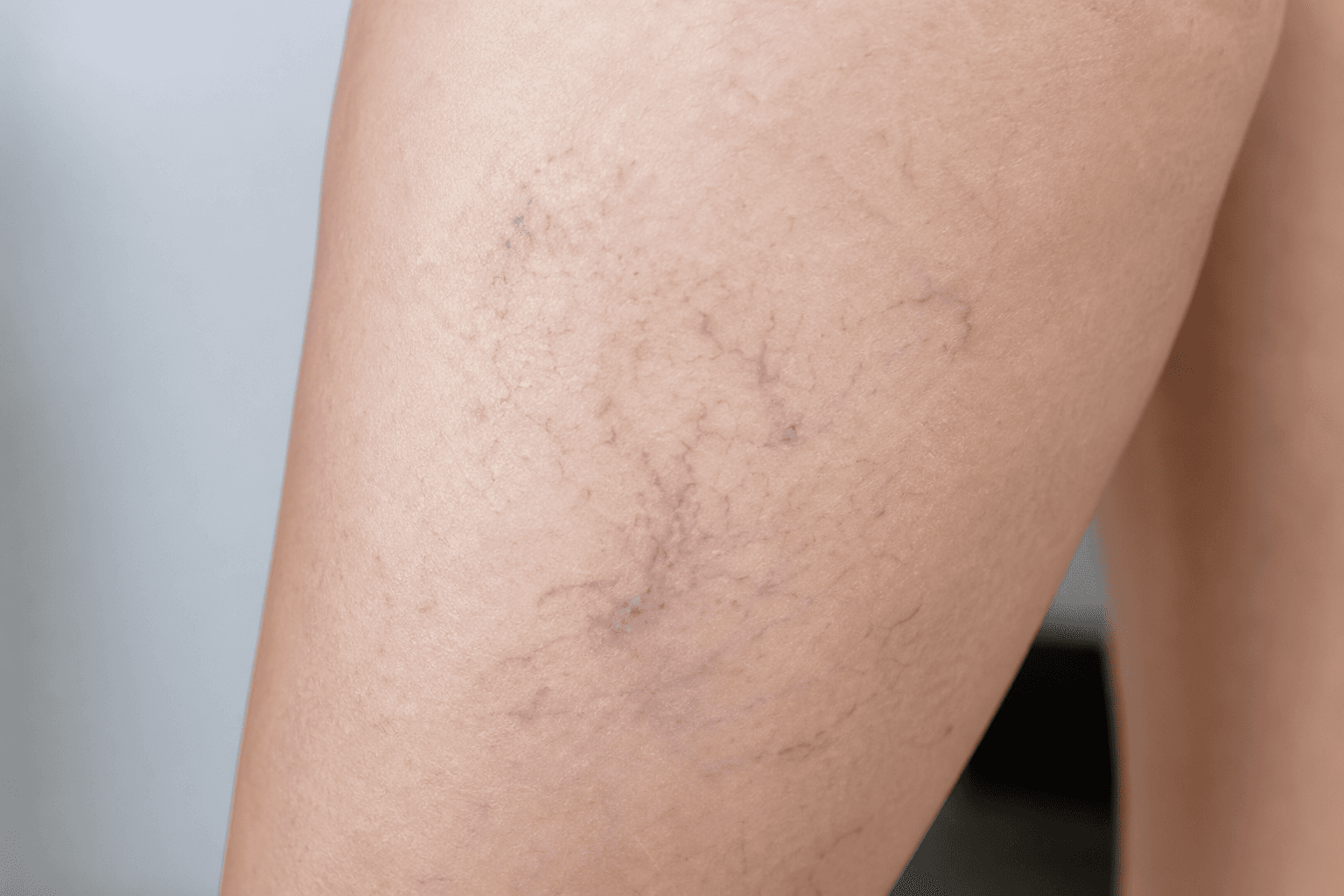
Varicose veins are enlarged, twisted veins that appear most often on the legs and feet. They develop when the one-way valves inside your veins weaken or fail, allowing blood to pool rather than flow efficiently back toward the heart.
The result is bulging, rope-like veins visible beneath the skin, often accompanied by aching, heaviness, swelling, and cramping, especially after long periods of standing or sitting.
Who Gets Varicose Veins?
Varicose veins affect an estimated 23% of American adults. In New York City and Long Island, where many residents spend hours commuting, standing at work, or sitting at a desk, prevalence is particularly high.
Risk factors include:
- Genetics: A family history of varicose veins is the strongest predictor
- Prolonged standing or sitting: Common among nurses, teachers, retail workers, and office professionals
- Pregnancy: Increased blood volume and hormonal changes place added pressure on leg veins
- Age: Vein valves naturally weaken over time
- Obesity: Excess weight increases pressure in leg veins
- Female sex: Women are more likely to develop varicose veins, though men are certainly not immune
How Schulman Treats Varicose Veins
At Schulman Vein and Laser Center, varicose vein treatment is not one-size-fits-all. Dr. Martin L. Schulman and Dr. Lee G. Schulman personally evaluate every patient and recommend the most appropriate minimally invasive approach for your specific veins and symptoms.
Our treatment process:
- Complimentary vein screening at any of our three offices (Manhattan, Manhasset, or Commack)
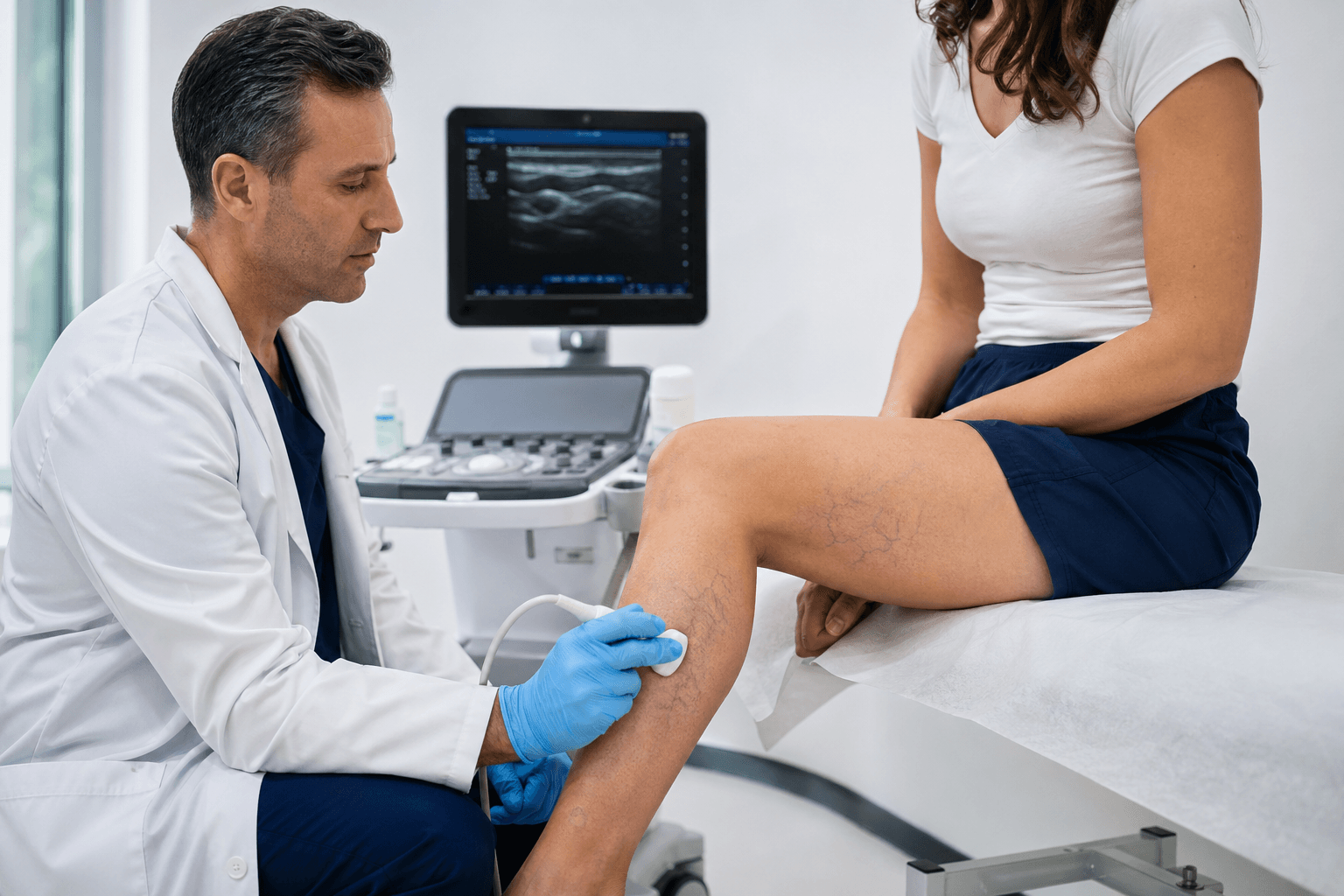
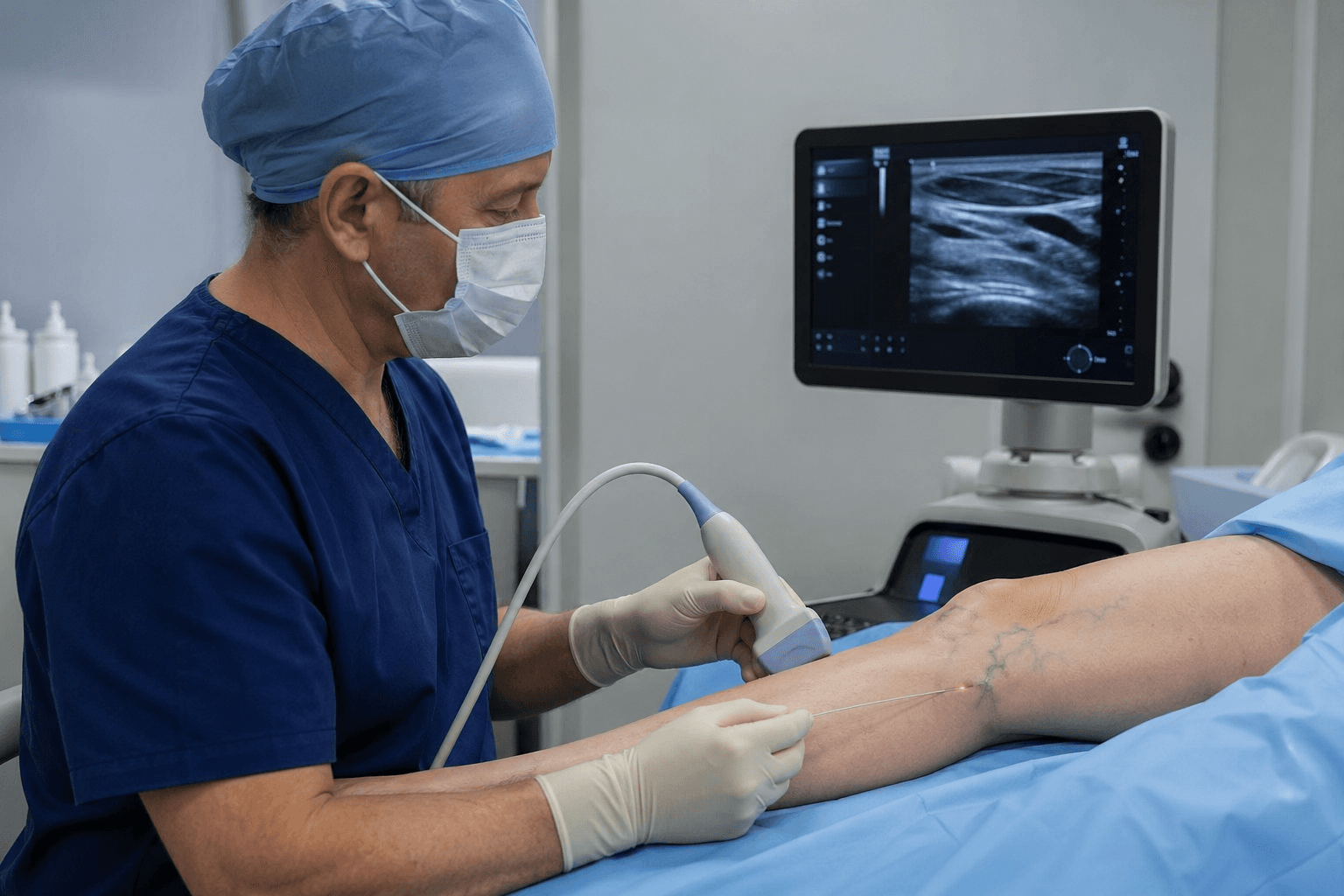
- Ultrasound mapping to identify incompetent valves and guide treatment decisions
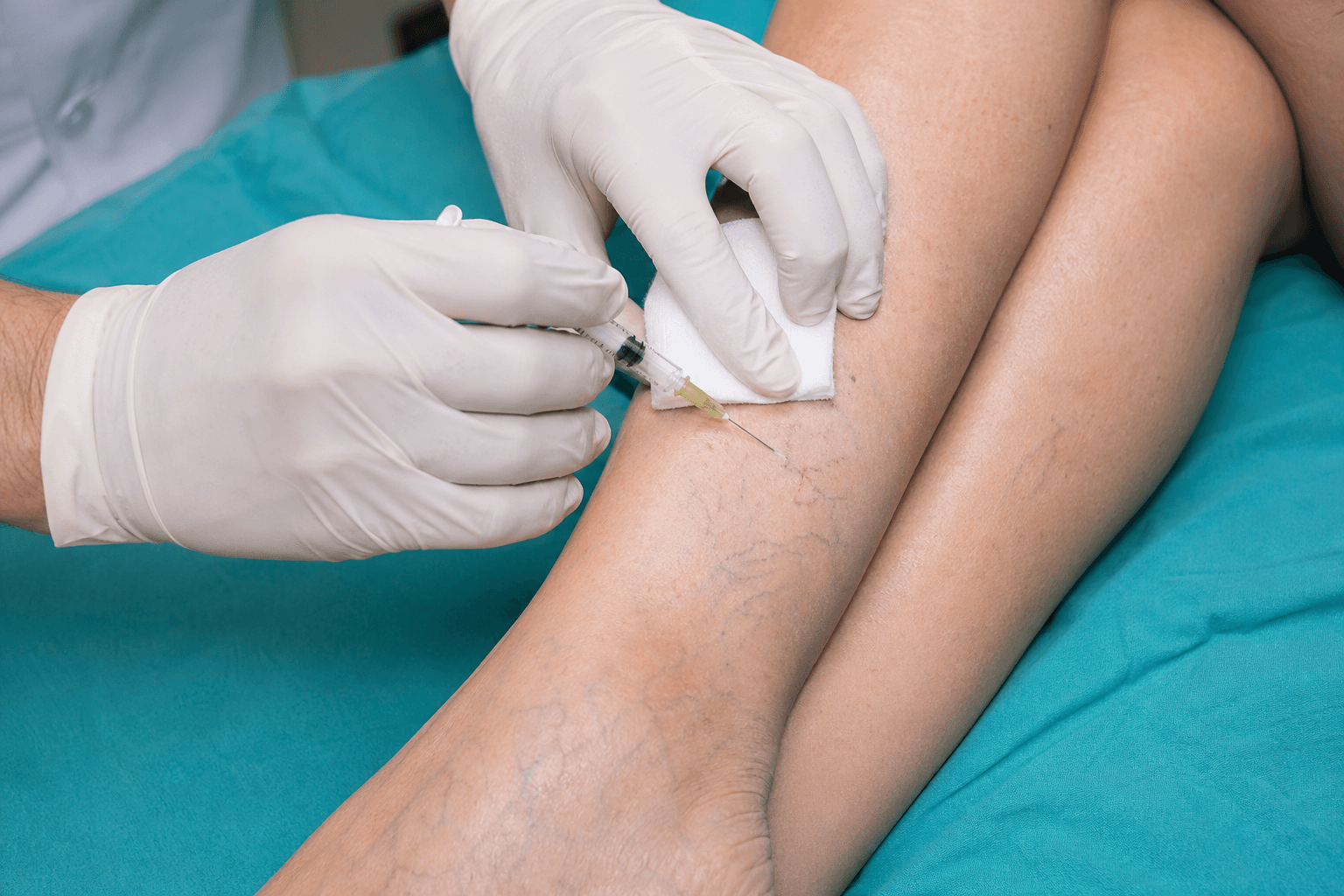
- Personalized treatment recommendation, most often EVLT, sclerotherapy, or a combination
- In-office procedure with local anesthesia and physician-led care
- Walk-out, same-day recovery with light activity typically resumed immediately
What to Expect at Your Appointment
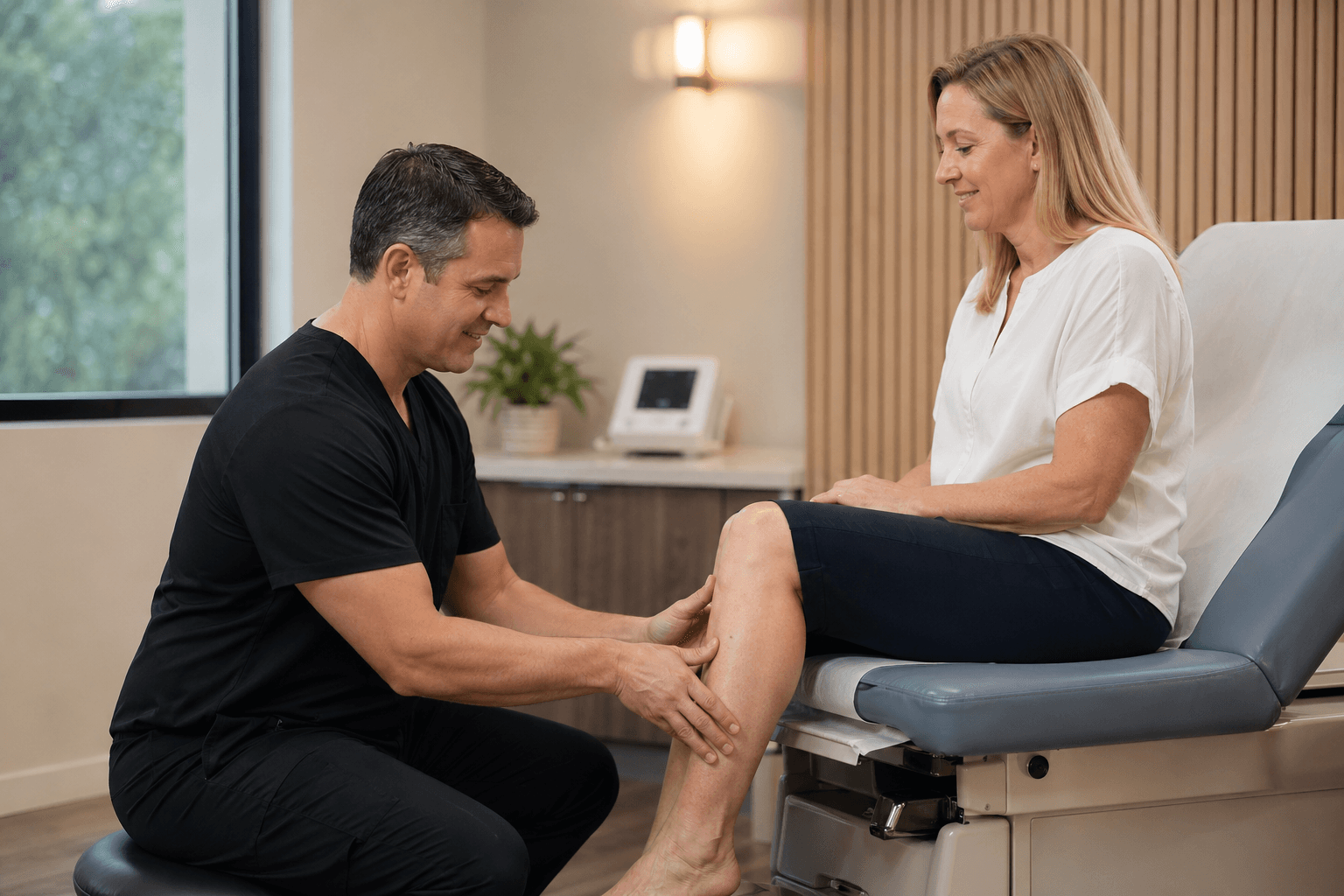
Your appointment begins with a conversation about symptoms, lifestyle, and treatment goals before any procedure is recommended.
If treatment is recommended, our team confirms insurance, coordinates scheduling at your preferred location, provides clear pre/post instructions, and follows up on recovery.
Most patients report mild pressure or warmth during EVLT rather than significant pain. Post-procedure bruising and soreness are common and usually resolve in one to two weeks.
Insurance & Coverage
Many varicose vein treatments, especially EVLT, are covered when medically necessary. Insurers typically require documented symptoms and a conservative trial such as compression stockings.
Cosmetic-only treatment is generally self-pay. Our team verifies benefits before your visit and helps you understand coverage clearly.