

Superficial thrombophlebitis is inflammation involving a blood clot in a vein near the skin, according to MedlinePlus. A new painful vein deserves medical attention. Our vein disorders page explains the conditions we evaluate, but sudden symptoms should not wait for a routine screening.
Get help first: Call 911 for chest pain, trouble breathing, coughing up blood or fainting. Call 911 for severe vein pain and swelling, too. Mayo Clinic and MedlinePlus identify these as emergency warning signs. For a newly red, swollen or tender vein, contact a doctor right away. Do not wait for a scheduled office visit or a reply to a website form.
Quick Summary
- A surface-vein clot and a deep vein clot involve different veins; a visible mark cannot establish which condition you have.
- Mayo Clinic describes a tender, firm cord under the skin as one possible sign of superficial thrombophlebitis.
- MedlinePlus says ultrasound can help confirm the condition.
- Bring your questions and medication list to the medical assessment.
- Emergency symptoms take priority over booking a vein screening.
What is superficial thrombophlebitis?
It is a clot-associated inflammation of a vein just beneath the skin. MedlinePlus distinguishes this from a clot in a deeper vein. The terms can be confusing: the NHS also uses “superficial vein thrombosis” when describing phlebitis near the surface.
“Superficial” describes the vein's location. It is not a diagnosis you can make by looking at your leg. Keep that distinction in mind when reading about leg swelling and vein evaluation: use a guide to prepare questions, rather than to choose your own diagnosis.
Which symptoms should you have checked?
New pain, tenderness, warmth or swelling along a vein warrants a medical assessment. MedlinePlus also lists skin redness and hardening of the vein. The NHS notes that redness can be harder to see on brown and black skin, so a color change is not the only thing to notice.
Tell the clinician when the symptoms began, where they are and whether they have changed. Bring your medication list and any instructions from recent medical care. Our first vein appointment guide can help organize that conversation, once urgent needs have been addressed.
Ask for medical help rather than waiting to see whether the appearance changes.
How does a surface-vein clot differ from DVT?
The key difference is location: superficial thrombophlebitis involves a vein near the skin; deep vein thrombosis, or DVT, involves a vein deeper inside the body. Mayo Clinic describes pain and swelling with both conditions. Those overlapping symptoms are why an online comparison cannot settle the diagnosis.
MedlinePlus explains that a deep vein clot can travel to the lungs and cause a pulmonary embolism. Its DVT guidance lists chest pain, breathing difficulty, coughing up blood and fainting as emergency signs. Seek emergency care for those symptoms, even if no clot has been diagnosed.
Once a clinician has assessed your immediate symptoms, ask which veins are involved and what follow-up is needed. Write down the answer and the signs that should prompt another call.
Why might a doctor recommend ultrasound?
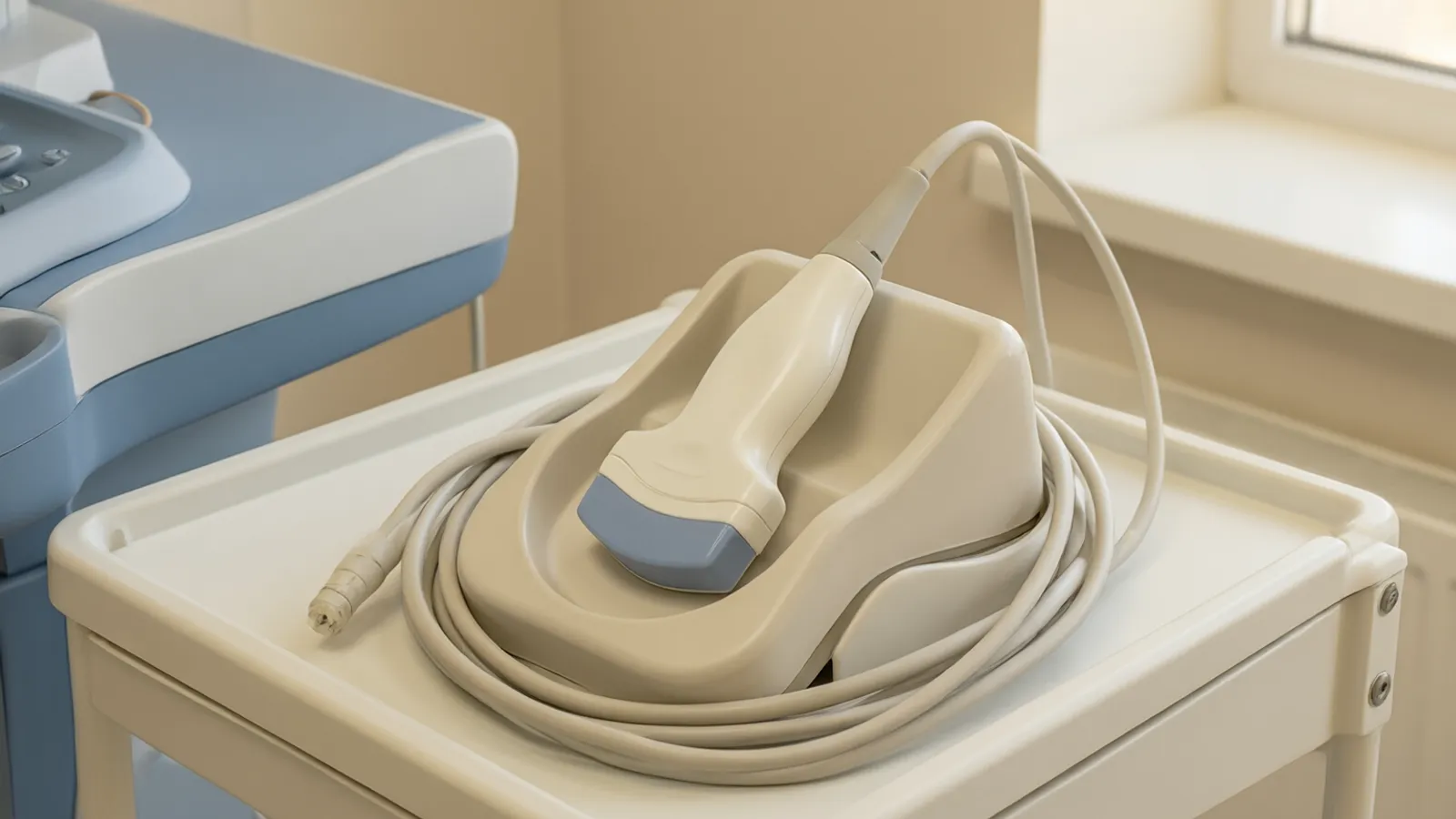
Ultrasound helps clinicians assess veins and look for clots. RadiologyInfo.org, the patient resource from the American College of Radiology and the Radiological Society of North America, explains that venous ultrasound uses sound waves to show veins. Doppler imaging can assess blood movement.
MedlinePlus says ultrasound can help confirm superficial thrombophlebitis. RadiologyInfo.org also identifies searching for deep vein clots as a common use of venous ultrasound. The reason for your scan matters; ask what question it is intended to answer.
Our venous duplex ultrasound guide explains the test in more detail. The practice's service page lists Doppler evaluation when indicated, not an ultrasound for every screening.
What might treatment involve after an assessment?
Treatment depends on the clinician's findings. MedlinePlus describes measures a provider may recommend for discomfort, including elevation and a warm compress. The NHS lists anti-inflammatory medicines and, in some cases, blood-thinning medicine among treatment options.
These are descriptions of medical care, not instructions to start a medicine. The NHS warns against taking ibuprofen with prescribed blood thinners unless a doctor advises it. Ask your clinician or pharmacist before adding a medicine.
Compression also needs an individual recommendation. The NHS says stockings should be professionally recommended and fitted. Ask whether they suit your situation rather than choosing a pressure level yourself.
MedlinePlus advises contacting your provider if symptoms worsen or do not improve with treatment. Before leaving, ask whom to call, when to follow up and what changes require urgent care. This article does not set a recovery deadline or recommend a procedure for an acute clot.

What should you ask about varicose veins afterward?
Ask whether an underlying vein problem needs a separate evaluation. Mayo Clinic identifies varicose veins as a common contributor to superficial thrombophlebitis. That does not mean every visible varicose vein contains a clot.
For a later conversation about ongoing vein concerns, our varicose vein treatment page describes services the practice offers. Keep that discussion separate from the immediate assessment of a newly painful or swollen vein.
Frequently Asked Questions
Does a hard vein mean I have a blood clot?
It does not establish a diagnosis on its own. Mayo Clinic lists a tender, hard cord as a possible surface-vein clot sign; a doctor needs to assess a new change.
What should I bring to the assessment?
Bring your medication list, any recent test reports and your questions. Tell the clinician when the symptoms started and what has changed.
Does a screening always include ultrasound?
No. Schulman Vein and Laser Center's screening page says Doppler ultrasound is used when indicated. Ask what evaluation is appropriate for your symptoms.
Can I wait for a free screening if my leg suddenly swells?
Seek urgent medical assessment instead. NHS guidance calls for urgent assessment of sudden swelling; severe vein pain and swelling or chest or breathing symptoms need emergency care under the guidance above.
Book a Free Vein Screening in New York
Sudden or severe symptoms come first. Seek urgent medical assessment for sudden limb swelling, and call 911 for severe vein pain and swelling, chest pain, trouble breathing, coughing up blood or fainting. Do not use a screening request as an emergency-care route.
For non-urgent vein concerns, book a Free Vein Screening at Schulman Vein and Laser Center in Manhattan, Manhasset or Commack. Bring questions about your symptoms, prior evaluations and next steps.
Manhattan: 212.987.0500. Manhasset: 516.482.4477. Commack: 631.543.4599.
This article is educational and does not replace an in-person medical evaluation.
Sources
Need Personalized Vein Care?
Schedule a physician-led evaluation and review treatment options tailored to your symptoms and goals.