

Quick Summary
- Family history and vein disease are closely linked: having a parent or sibling with varicose veins or chronic venous insufficiency (CVI) significantly raises your own risk.
- Twin and family studies consistently show inherited differences in vein wall and valve strength contribute to venous disease, alongside lifestyle and occupational factors.
- Most cases involve a complex, multi-gene inheritance pattern rather than a single identifiable gene, though rare hereditary vein-valve conditions do exist.
- People with a strong family history often notice spider veins, aching, or heaviness earlier in life and may benefit from an earlier baseline evaluation.
- A physician-led duplex ultrasound can confirm whether venous reflux is present, even before varicose veins become visible.
Family history is one of the most consistently documented risk factors for varicose veins and chronic venous insufficiency, alongside age, pregnancy, and prolonged standing.
What Family History Tells Us About Your Vein Disease Risk
Family history and vein disease are closely linked. If a parent, grandparent, or sibling has visible varicose veins or has been treated for chronic venous insufficiency, your own risk of developing vein disease is meaningfully higher than someone with no family history. At Schulman Vein and Laser Center, we regularly meet New York patients who are surprised to learn how strong this genetic connection is, especially when they assumed their leg symptoms were caused only by standing, pregnancy, or age.
This guide explains what family history really means for your vein health, which warning signs to watch for earlier, and when Manhattan, Manhasset, and Commack patients should consider a screening even without obvious symptoms yet, as part of our vein disorders and conditions care.
Inherited differences in vein wall and valve strength, shaped by multiple genes rather than one, are believed to be a major reason family history and vein disease track together.
How Family History and Vein Disease Are Connected
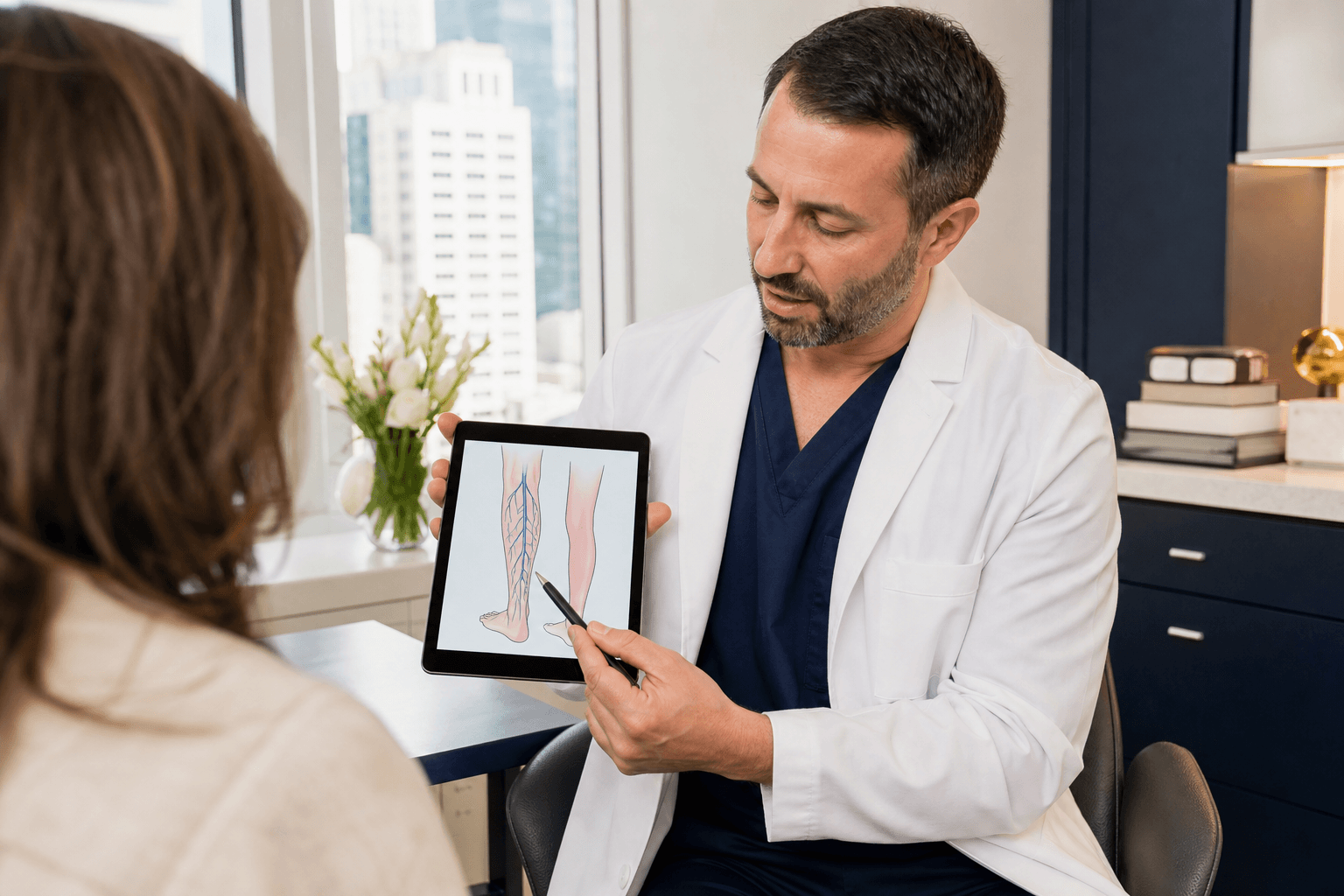
Veins rely on one-way valves to keep blood moving upward toward the heart against gravity. Chronic venous insufficiency develops when these valves weaken and allow blood to flow backward and pool in the lower legs, a process that can eventually stretch vein walls into the bulging, twisted veins most people recognize as varicose veins.
Twin and family studies have found that inherited traits play a substantial role in how prone a person's vein walls and valves are to this kind of breakdown, independent of lifestyle. Large population studies, including long-running European vein cohorts, have consistently reported that varicose veins and CVI are significantly more common among people with an affected parent or sibling than among those with no family history.
Most researchers describe the inheritance pattern as complex, involving the combined effect of multiple genes that influence connective tissue and valve structure, rather than a single "vein disease gene." A small number of rare hereditary conditions have been linked to specific gene variants affecting vein valve development, but these account for only a minority of cases. For most patients, a family history simply means their vein walls and valves may be inherently more prone to the same wear-and-pressure process that lifestyle factors like standing or pregnancy can also accelerate.
Having a family history of vein disease does not guarantee you will develop it, and having no known family history does not rule it out. It is one important risk factor among several, not a diagnosis on its own.
A known family history is a reasonable, low-pressure reason on its own to schedule a baseline vein evaluation in New York, rather than waiting for symptoms to become noticeable.
New York Patients: When Family History Should Prompt a Vein Check
If you know that a parent or sibling has been treated for varicose veins, spider veins, or chronic venous insufficiency, it's worth mentioning that history at your next physical or scheduling a dedicated vein screening, even if your legs currently look and feel normal. This is especially relevant for adult children of patients we've treated at our Manhattan, Manhasset, and Commack offices, many of whom eventually develop similar patterns themselves.
- Adult children of patients with varicose veins or CVI, particularly once in their late 20s to 40s
- Siblings of someone recently diagnosed with venous reflux, spider veins, or leg swelling from vein disease
- Patients with a strong family history who are also pregnant, work standing jobs, or are approaching midlife, when multiple risk factors can compound
- Anyone with a family history who has noticed early spider veins, aching, or heaviness but assumed it was unrelated to genetics
Because family history and vein disease are connected, patients with an affected parent or sibling may benefit from paying closer attention to early spider veins, aching, or swelling rather than assuming these are unrelated or premature.
Early Signs Worth Watching If Vein Disease Runs in Your Family
Patients with a strong family history sometimes develop recognizable vein symptoms earlier than average, which is one more reason genetic risk is worth taking seriously rather than dismissing as inevitable.
- Small spider veins or reticular veins appearing in your 20s or 30s, earlier than typically expected
- Aching, heaviness, or fatigue in the legs by the end of the day, similar to what's described in our guide to leg swelling and vein disease
- Ankle or lower-leg swelling that builds through the day and improves overnight
- Visible bulging veins, especially behind the knee or along the inner calf, appearing at a younger age than they did in your affected parent
- Itching or mild skin changes over the lower leg, covered further in our guide to itchy legs and vein disease
Family history sets a baseline risk, but pregnancy, standing occupations, age, and body weight can all accelerate how quickly that genetic predisposition becomes symptomatic vein disease.
Other Risk Factors That Compound a Genetic Predisposition
Genetics rarely act alone. For patients with a family history, other well-documented risk factors can accelerate the same underlying process, which is why we ask about all of them during an evaluation rather than family history in isolation.
- Pregnancy, which increases blood volume and hormonal changes that affect vein walls; see our guide to pregnancy and varicose veins
- Occupations that involve standing all day, which reduces the calf muscle pump's ability to move blood out of the legs
- Age, since vein walls and valves naturally lose some elasticity over time
- Higher body weight, which increases pressure on leg veins
- Prior blood clots or significant leg injury, which can damage vein valves directly
If you have a family history and one or more of these compounding factors, an earlier baseline evaluation is a reasonable, low-pressure step rather than something to postpone.
Persistent, worsening, or skin-related vein symptoms warrant a physician evaluation, and any sudden one-sided swelling or calf pain needs prompt medical attention regardless of family history.
When Vein Symptoms Need Prompt Care
Mild aching or occasional visible veins are common and not an emergency. Contact your physician if leg symptoms persist despite rest and elevation, worsen steadily over weeks or months, or come with skin changes such as thickening, discoloration, or a wound near the ankle that will not heal.
Sudden one-sided leg swelling, redness, warmth, or calf pain is different from typical vein disease symptoms and should not be assumed to be genetic. Seek prompt medical evaluation, since these can be signs of a blood clot. Call emergency services for chest pain or shortness of breath.
Diagnosis relies on duplex ultrasound rather than family history alone, and most confirmed cases are treatable with minimally invasive, in-office procedures.
How We Diagnose and Treat Vein Disease Linked to Family History
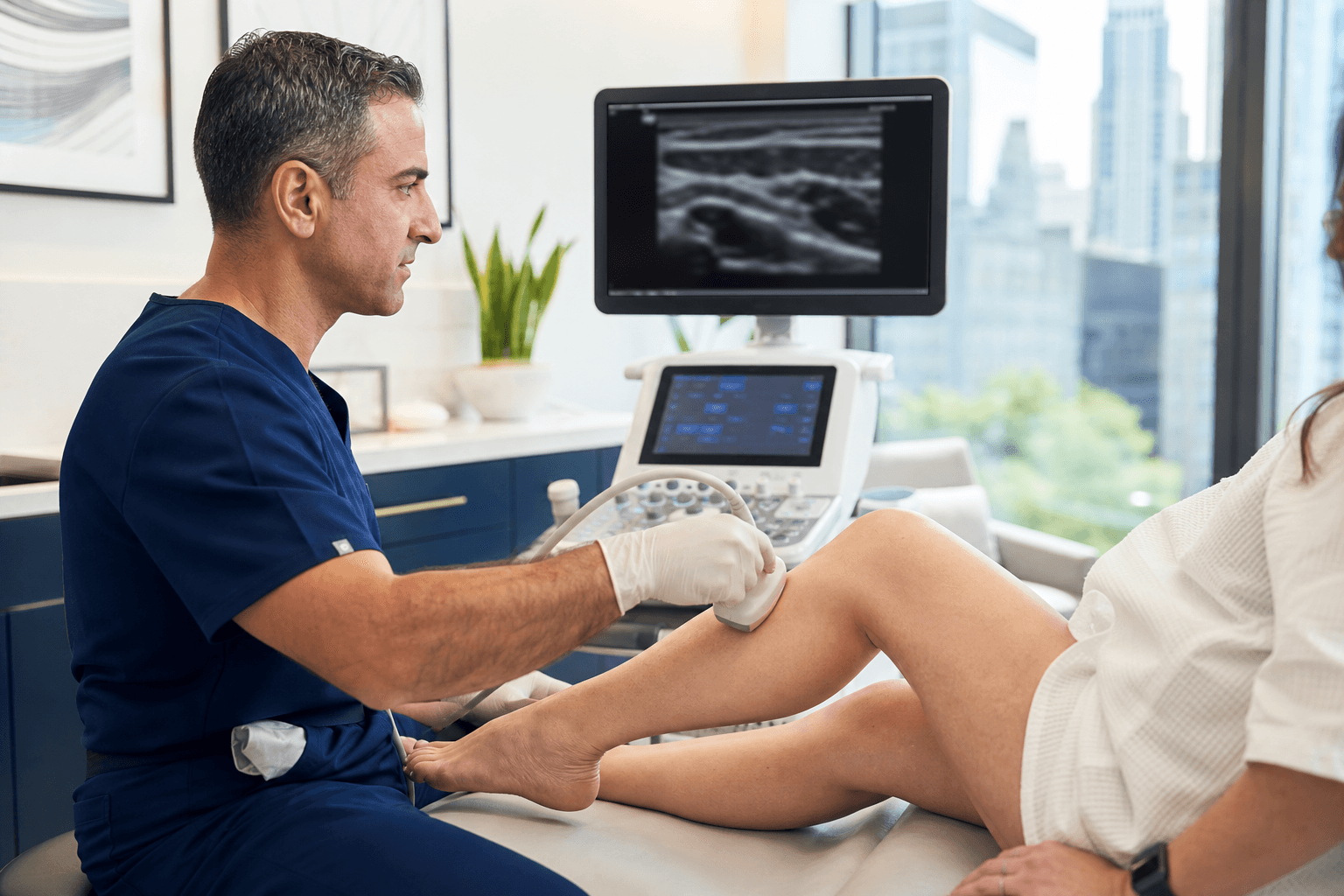
A vein evaluation begins with a physical exam and a review of your family and symptom history. Duplex ultrasound is the standard next step: a painless imaging test that maps your leg veins and measures blood flow direction to confirm whether venous reflux is present, often before varicose veins are visible to the eye.
When treatment is appropriate, most patients today are candidates for minimally invasive, in-office procedures rather than traditional surgery, including radiofrequency ablation, VenaSeal, and sclerotherapy for varicose and spider veins. These procedures are performed under local anesthesia, and most patients return to normal activity within a day or two, following their physician's specific guidance.
Book a Free Vein Screening in New York
If vein disease runs in your family, don't wait for visible varicose veins before asking questions. Schulman Vein and Laser Center provides physician-led evaluations, including duplex ultrasound, at three New York locations serving Manhattan, Nassau County, and Suffolk County.
Book a Free Vein Screening to have your legs evaluated. Call Manhattan at 212.987.0500, Manhasset at 516.482.4477, or Commack at 631.543.4599. This article is educational and does not replace an in-person medical evaluation.
Frequently Asked Questions
Is vein disease actually hereditary?
Family history is one of the most consistently documented risk factors for varicose veins and chronic venous insufficiency. Twin and family studies show inherited differences in vein wall and valve strength contribute meaningfully to risk, though most cases involve multiple genes interacting with lifestyle factors rather than a single inherited cause.
If my parents had varicose veins, will I definitely get them too?
No. Family history raises your risk but does not guarantee you will develop varicose veins or CVI. It's one important risk factor among several, including pregnancy, standing occupations, age, and body weight, all of which can influence whether and how severely vein disease develops.
At what age should I get screened if vein disease runs in my family?
There's no single required age, but patients with a strong family history sometimes develop early spider veins or symptoms in their late 20s to 40s. If you notice early signs, or simply want a baseline evaluation given your family history, scheduling a free vein screening is a reasonable step rather than waiting for visible varicose veins.
Can I prevent vein disease if it runs in my family?
You cannot change your genetics, but managing compounding risk factors, such as maintaining a healthy weight, taking movement breaks during standing work, and wearing properly fitted compression stockings when appropriate, can help support vein health. An evaluation can also catch venous reflux early, when treatment options are more straightforward.
Is there a specific gene test for vein disease?
Genetic testing for vein disease is not part of routine clinical care, since most cases involve a complex combination of genes rather than one identifiable variant. A duplex ultrasound evaluation, not genetic testing, is the standard and most clinically useful way to assess whether venous reflux is present.
Related Treatment Resources
Need Personalized Vein Care?
Schedule a physician-led evaluation and review treatment options tailored to your symptoms and goals.