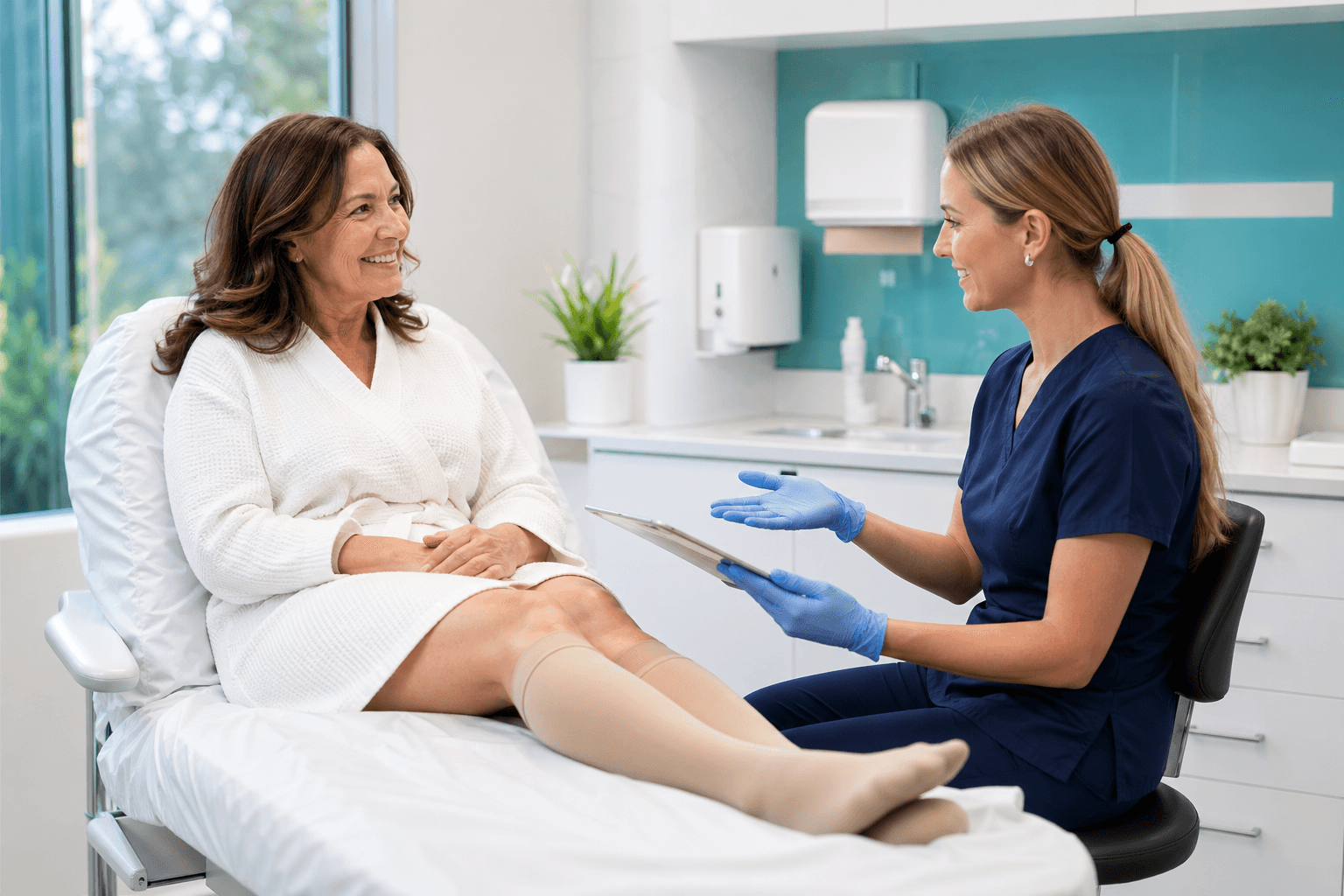
Walking is your most important recovery activity. Movement encourages circulation and reduces the risk of post-procedure discomfort.
Immediately after your procedure
Most patients walk out of the office the same day. Mild tightness, bruising, or tenderness along the treated vein is common and usually improves over days to weeks.
Your care team will provide clear written instructions about compression stockings, walking goals, hydration, and any short-term activity modifications before you leave.
If you are returning to a demanding schedule — which is common for our Manhattan and Midtown patients — your physician will give you specific guidance tailored to your routine.
- Walk out the same day — no bed rest required
- Wear compression stockings as directed (typically 1–2 weeks)
- Stay hydrated and walk regularly to support circulation
- Avoid prolonged sitting or standing in the first 48 hours
- Mild bruising, firmness, or pulling sensations are expected
What symptoms are normal during recovery
Temporary pulling sensations, firmness along treated veins, or mild skin discoloration can occur during the healing process. These are generally expected findings and are monitored during follow-up visits.
Your physician will describe what normal healing looks and feels like so you can distinguish expected recovery from anything that warrants a call to the office.
- Mild bruising or discoloration along the treated vein path
- Cord-like firmness under the skin (the treated vein closing off)
- Occasional aching or tightness in the first week
- Temporary skin darkening near treated spider veins
- Minor swelling in the treated leg, especially by end of day
Severe or worsening pain, sudden leg swelling, chest pain, or shortness of breath are not expected. Contact your physician's office immediately if you experience any of these symptoms.
Compression and daily walking are the two most impactful recovery tools. Skipping either significantly increases the chance of suboptimal results.
How to support better outcomes
Walking daily is the single most helpful thing you can do. Many patients are advised to aim for 30 minutes of walking per day in the week following treatment — a target that fits naturally into a New York commute.
Wearing compression stockings as directed, attending scheduled follow-up ultrasound checks, and avoiding high-impact activity in the early recovery period all improve consistency of results. See our varicose vein treatment page for details on what your specific procedure recovery may involve.
- Walk 20–30 minutes daily starting day one
- Wear compression stockings for the full prescribed period
- Attend your follow-up ultrasound appointment
- Avoid high-impact exercise, hot baths, and saunas for 1–2 weeks
- Report any unexpected symptoms promptly — do not wait for your follow-up
Timeline for visible improvement
Symptom relief — including reduced heaviness, aching, and swelling — often begins within days to weeks after EVLT or laser vein therapy. Cosmetic improvement may continue over several months as treated veins are gradually reabsorbed by the body.
If additional branch veins remain visible after your primary treatment, your physician may recommend staged spider vein treatment for a more complete result.
Most patients at Schulman Vein and Laser Center — across our Manhattan, Upper East Side, Manhasset, and Commack locations — see meaningful cosmetic improvement within six to twelve weeks.
Results from sclerotherapy for spider veins typically take longer to appear than EVLT results. Full cosmetic clearance after sclerotherapy can take 3–6 months, and some patients benefit from a second session.
When to call your doctor
Most patients complete recovery without complications, but it is important to know when to reach out. Do not wait until your next scheduled appointment if you notice unexpected symptoms.
Your Schulman care team is reachable by phone if you have questions after your procedure — do not hesitate to contact the office with any concerns.
- Severe or rapidly worsening leg pain
- Sudden new swelling, redness, or warmth in the treated leg
- Fever above 101°F
- Chest tightness, shortness of breath, or rapid heartbeat
- Wound site concerns such as unusual discharge or bleeding
Related Treatment Resources
Need Personalized Vein Care?
Schedule a physician-led evaluation and review treatment options tailored to your symptoms and goals.