The right treatment depends on vein anatomy, not appearance alone. A physician-led evaluation at Schulman Vein and Laser Center is the best starting point.
The Short Answer
EVLT (Endovenous Laser Treatment) is typically used for larger varicose veins and underlying venous insufficiency — the circulatory problem that causes varicose veins to form. Because it addresses a medical condition, it is often covered by insurance.
Sclerotherapy is typically used for spider veins and smaller surface vessels. It is a quicker procedure, but because it is generally considered cosmetic, it is usually self-pay.
If you are dealing with bulging, ropy veins with pain, swelling, or heaviness, EVLT may be the right path. If your concern is fine red or purple web-like veins near the skin surface, sclerotherapy is often the better fit. Patients across Manhattan, the Upper East Side, and Long Island regularly ask our team this exact question — and the answer always starts with a proper ultrasound evaluation.
What Is EVLT?
EVLT stands for Endovenous Laser Treatment. It targets venous insufficiency, where faulty vein valves allow blood to pool and flow backward instead of returning efficiently to the heart.
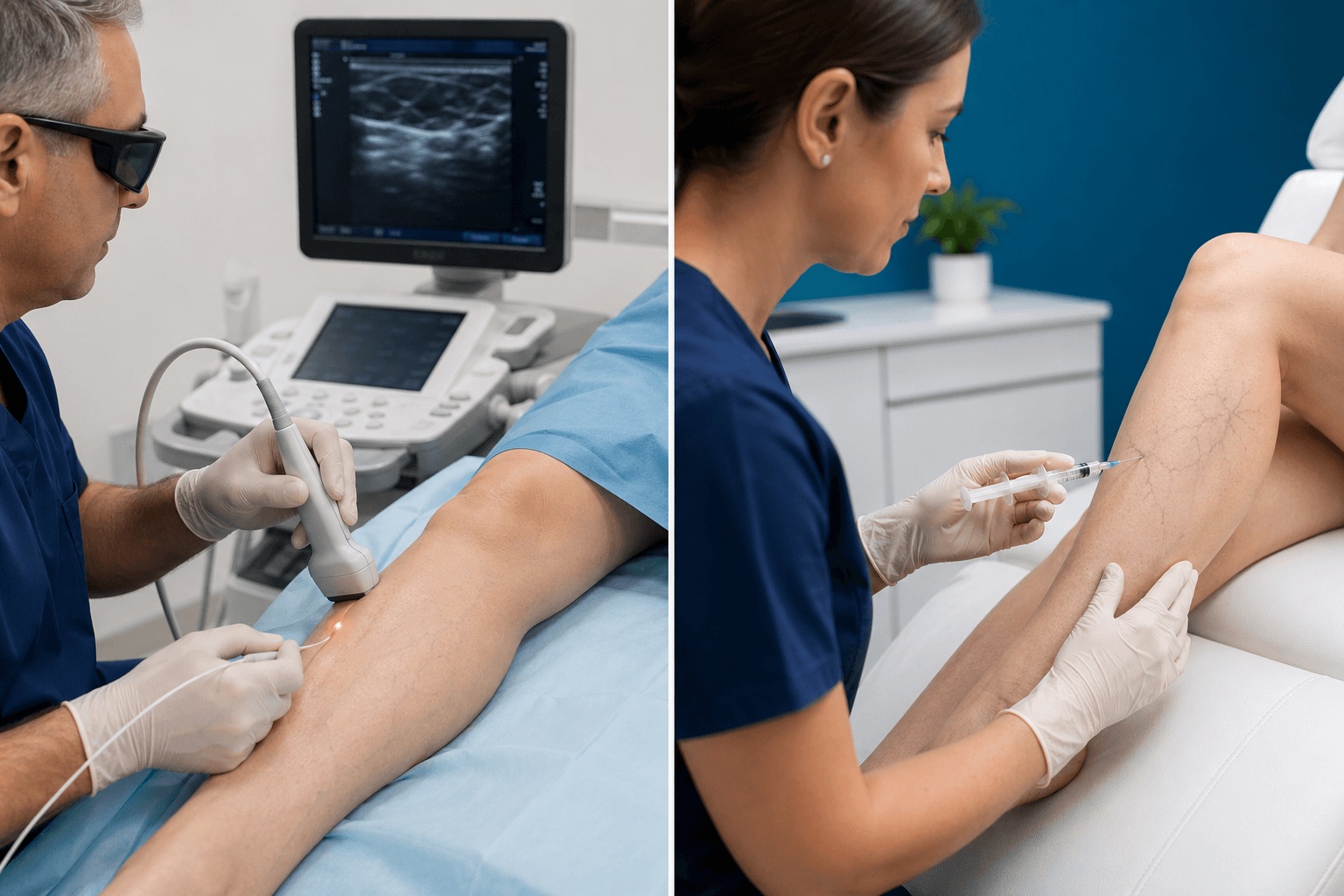
During the procedure, a thin laser fiber is inserted into the affected vein through a small puncture. Under ultrasound guidance, heat energy closes the vein from the inside. Blood naturally reroutes through healthier veins as the treated vein is reabsorbed.
The procedure typically takes 45 to 60 minutes in-office under local anesthesia. Most patients in our Manhattan and Midtown locations return to normal activity the same day or the day after treatment.
- Treats the root cause of varicose veins — venous reflux
- Performed under ultrasound guidance for precision
- In-office procedure, typically 45–60 minutes
- Often covered by insurance when medically necessary
- Patients walk out the same day
What Is Sclerotherapy?
Sclerotherapy treats spider veins and smaller superficial vessels by injecting a medical sclerosing solution directly into the vein. The vein wall collapses and gradually fades as the body clears it.
Most sessions take 15 to 30 minutes with little to no downtime. Patients at our spider vein treatment clinic usually return to normal daily activities right away.
Schulman Vein and Laser Center uses both traditional and foam sclerotherapy techniques based on vein size and treatment goals.
- Best for spider veins and smaller surface vessels
- No anesthesia required — minimal discomfort
- 15–30 minute in-office session
- Results develop gradually over weeks to months
- Usually self-pay; generally considered cosmetic
Many patients benefit from EVLT first to address underlying reflux, followed by sclerotherapy to treat residual surface veins.
Side-by-Side Comparison
EVLT is typically best for larger refluxing varicose veins and symptomatic venous insufficiency. Sclerotherapy is best for spider veins and smaller surface vessels.
Both are minimally invasive, in-office treatments and can be combined in a staged plan when clinically appropriate — which is common for New York patients managing both symptomatic varicose veins and cosmetic spider veins.
- EVLT: treats venous reflux, often insurance-covered
- Sclerotherapy: treats surface vessels, usually self-pay
- EVLT requires local anesthesia; sclerotherapy does not
- Both allow same-day return to routine activity
- Staged combination treatment is often the most complete approach
Varicose Veins vs. Spider Veins
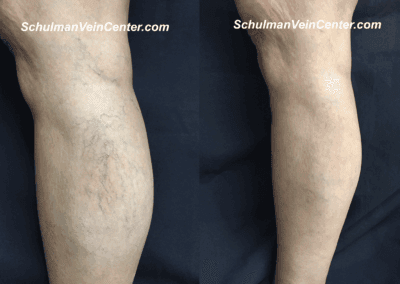
Varicose veins are usually larger, raised, and associated with venous reflux symptoms such as heaviness, aching, and swelling. They signal a deeper circulation problem. Learn more on our varicose vein treatment page.
Spider veins are smaller surface vessels and are more commonly cosmetic, though they can occasionally cause mild burning or aching.
Insurance Differences
EVLT is frequently covered by insurance when medical necessity is documented through symptoms and ultrasound-confirmed venous insufficiency. Most New York carriers and Medicare require a trial of compression therapy before approving procedures.
Sclerotherapy is usually considered cosmetic and is typically self-pay unless unusual medical criteria are met.
Schulman Vein and Laser Center helps patients understand insurance requirements and handles prior authorization documentation before treatment is scheduled.
Before your first appointment, you do not need to call your insurer. Bring your insurance card to your free vein screening and our team will verify your benefits and estimated out-of-pocket cost.
Do not choose a treatment before you have an ultrasound evaluation. Anatomy drives the decision — not preference or appearance alone.
Which Is Right for You?
The right treatment depends on your vein anatomy, symptoms, and ultrasound findings. Choosing treatment before a proper evaluation can lead to recurrence or incomplete results.
A physician-led vein exam is the best first step. Schedule a free vein screening at Schulman Vein and Laser Center to get a personalized recommendation.
See a Specialist at Schulman Vein and Laser Center
Patients across Manhattan, the Upper East Side, Midtown, and Long Island rely on Schulman Vein and Laser Center for physician-led vein diagnosis and individualized treatment planning.
If you are unsure where to start, book a free vein screening to confirm whether EVLT, sclerotherapy, or a staged combination is the best fit for your condition.
Related Treatment Resources
Need Personalized Vein Care?
Schedule a physician-led evaluation and review treatment options tailored to your symptoms and goals.