
Quick Summary
- Compression stockings apply graduated pressure to the legs, improving blood flow and reducing swelling, aching, and fatigue caused by vein disease.
- They are commonly recommended for varicose veins, chronic venous insufficiency, DVT prevention, pregnancy, and post-treatment recovery.
- Compression levels range from 15–20 mmHg (over-the-counter) to 40+ mmHg (prescription) — the right level depends on your diagnosis.
- Proper fit matters as much as compression level; ill-fitting stockings can cause discomfort or even restrict circulation.
- A Free Vein Screening at Schulman Vein and Laser Center can determine whether compression stockings are right for you — or whether a minimally invasive treatment is a better solution.
How Compression Stockings Work
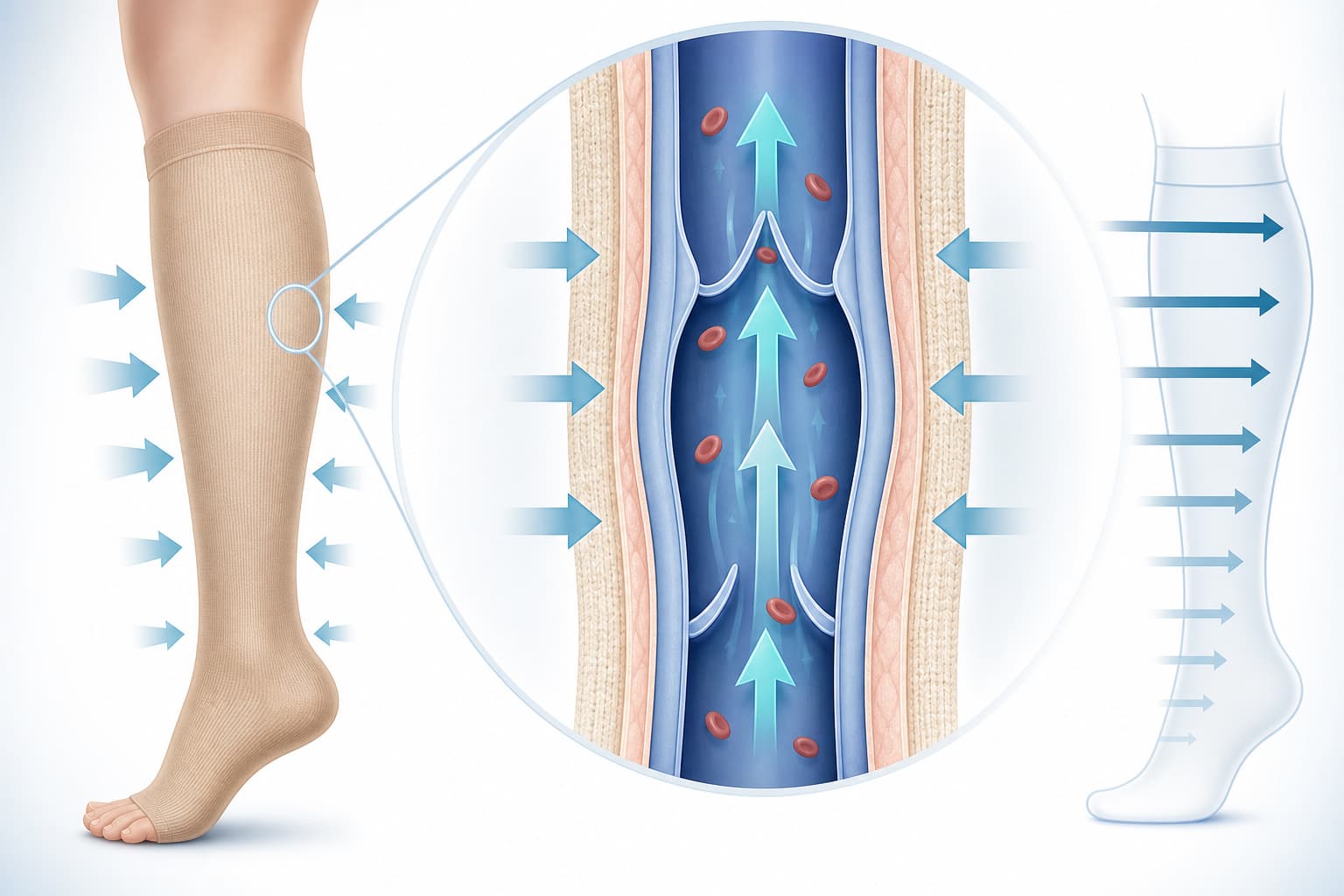
The veins in your legs face a constant mechanical challenge. Every heartbeat sends blood downward through your arteries, and your leg veins must then push that blood back up against gravity, all the way to your heart. They accomplish this through a system of one-way valves — tiny flaps that open to let blood flow upward and close to prevent it from falling back down.
When those valves weaken or become damaged, blood begins to pool in the lower legs. The result is what most people recognize as varicose veins: the twisted, bulging vessels that appear beneath the skin, often accompanied by aching, heaviness, swelling, and fatigue.
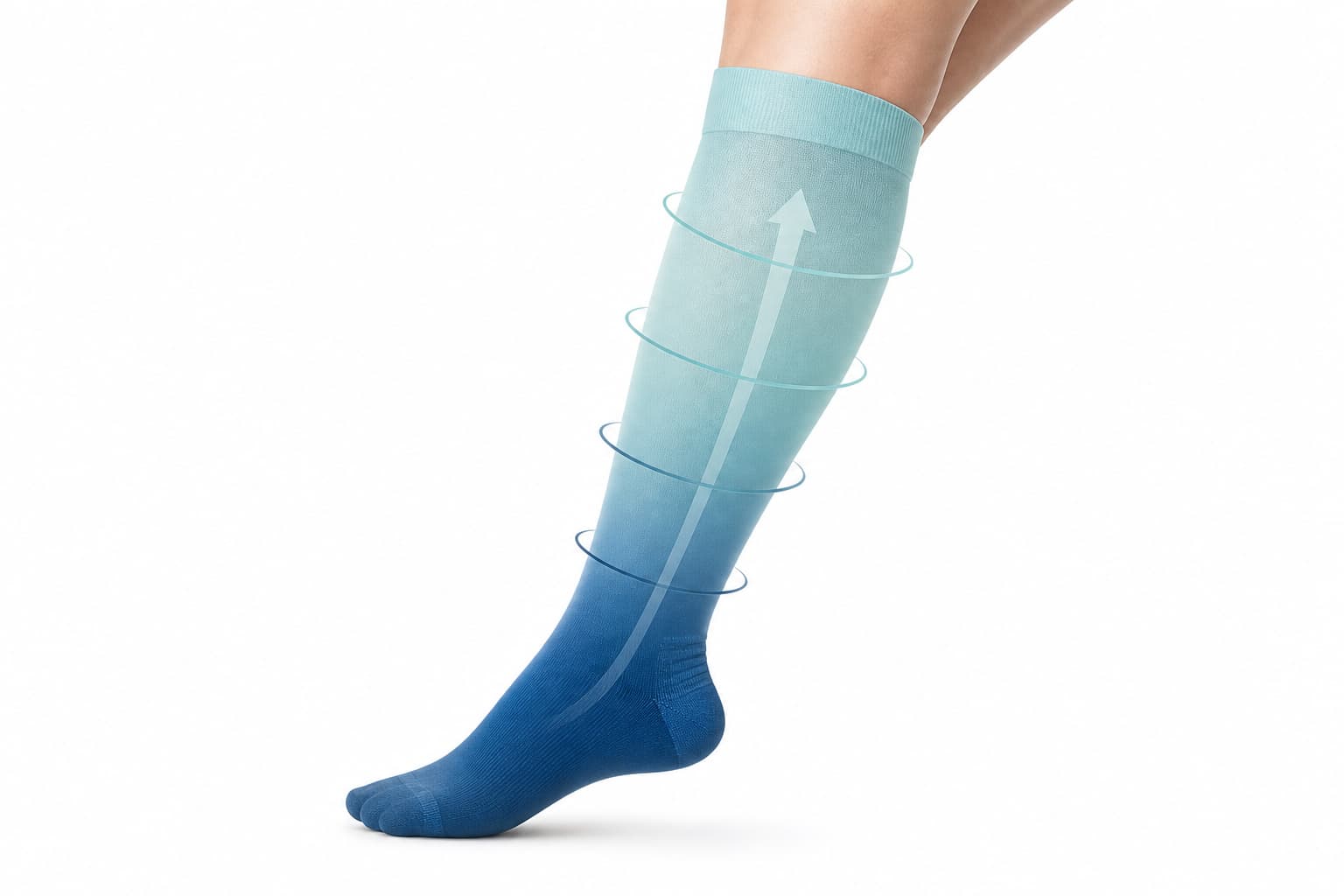
Compression stockings work by applying graduated pressure to the leg — tightest at the ankle, gradually decreasing toward the knee or thigh. This external pressure assists the vein walls and helps push pooled blood back upward, reducing the load on damaged valves. The mechanical effect is simple, but the relief it provides can be significant.
Who Should Wear Compression Stockings?
Compression stockings are not a one-size-fits-all recommendation. They are most appropriate for patients who fall into one or more of the following categories:
If you have been diagnosed with an arterial circulation problem, compression stockings may not be appropriate without medical supervision. A vein specialist can assess whether compression is safe and beneficial for your specific situation.
- Varicose veins or spider veins accompanied by symptoms such as leg aching, heaviness, or swelling
- Chronic venous insufficiency (CVI), where damaged valves cause ongoing circulation problems
- A history of deep vein thrombosis (DVT) or pulmonary embolism
- High DVT risk — including patients who are pregnant, recovering from surgery, or taking hormonal medications
- Jobs that require prolonged standing or sitting, such as nursing, teaching, office work, or air travel
- Post-treatment recovery after sclerotherapy, EVLT (endovenous laser therapy), or ambulatory phlebectomy
- Pregnancy, particularly in the second and third trimesters when blood volume increases and the uterus puts pressure on pelvic veins
Understanding Compression Levels
Compression stockings are measured in millimeters of mercury (mmHg) — the same unit used to measure blood pressure. The higher the number, the greater the pressure applied to the leg. Choosing the right level is important: too little pressure provides minimal benefit, while too much can cause discomfort or, in rare cases, impede circulation.
Here is a general overview of common compression levels:
- 15–20 mmHg (mild) — Available over the counter. Appropriate for mild leg fatigue, minor swelling, and everyday prevention during travel or prolonged standing. A reasonable starting point for patients with no formal diagnosis.
- 20–30 mmHg (moderate) — The most commonly prescribed level for varicose veins, mild chronic venous insufficiency, pregnancy-related vein changes, and post-treatment recovery. Usually requires a prescription.
- 30–40 mmHg (firm) — Prescribed for moderate to severe venous insufficiency, post-thrombotic syndrome, and significant edema. Should only be worn under physician guidance.
- 40+ mmHg (extra firm) — Reserved for severe venous disease, lymphedema, or active venous ulcers. Always requires a physician prescription and fitting by a trained professional.
If you have been told you need 20–30 mmHg stockings or higher, see a vein specialist before purchasing. Many insurance plans cover prescription-grade compression stockings when medically indicated — and your doctor can confirm proper sizing to ensure maximum benefit.
Knee-High vs. Thigh-High vs. Pantyhose: Which Length Do You Need?
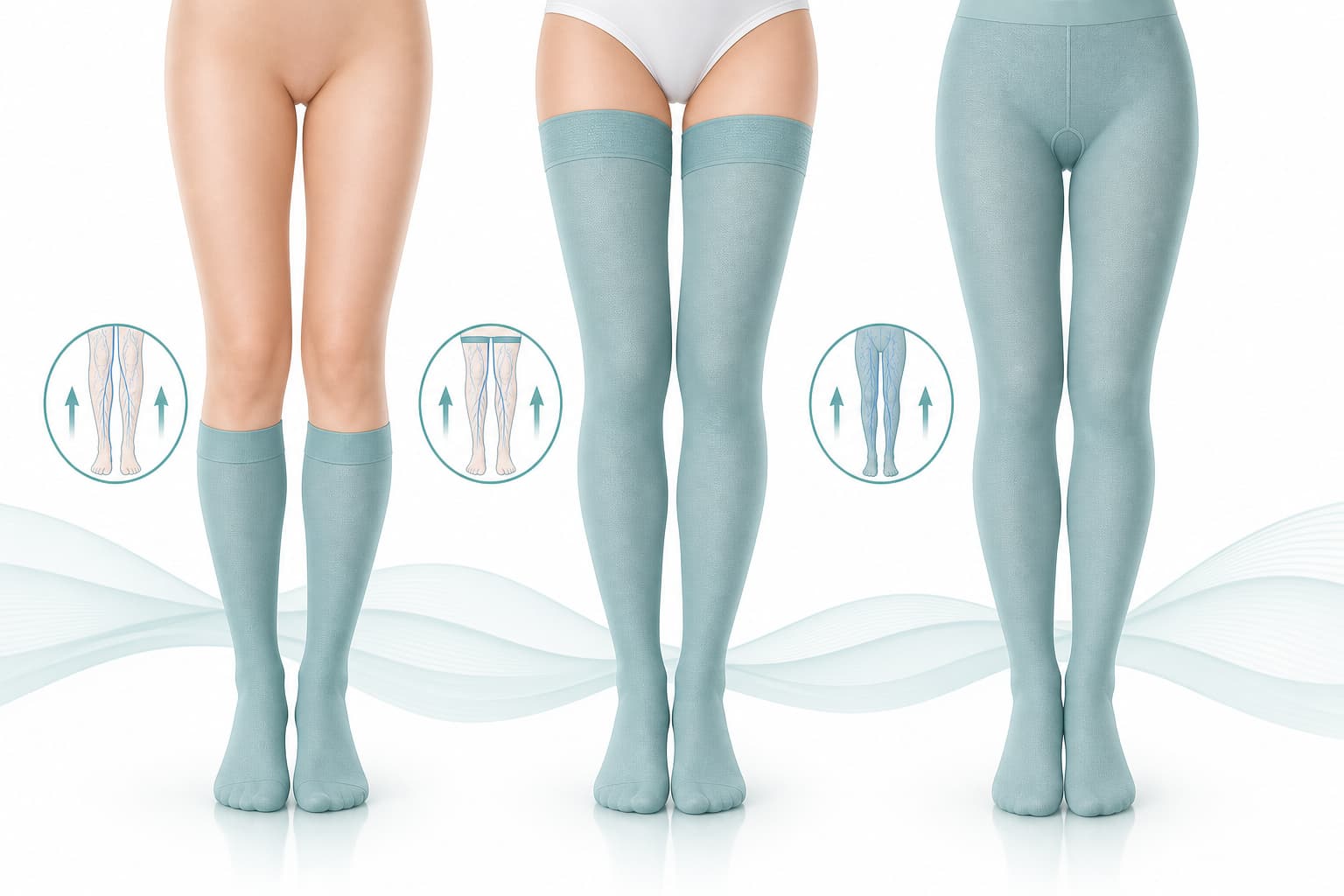
Compression stockings come in several lengths, and the right choice depends on where your vein issues are located.
Knee-high stockings are the most commonly recommended style. They address the lower leg — where the majority of varicose veins, swelling, and circulation problems occur — and are easier to put on and take off than longer styles. For most patients with varicose veins below the knee, knee-high compression is sufficient.
Thigh-high stockings extend coverage up the entire leg and are appropriate when varicose veins or swelling extend above the knee, or when a vein specialist specifically recommends full-leg compression.
Compression pantyhose cover both legs up through the waist. They are often recommended during pregnancy, when pelvic venous pressure contributes to symptoms throughout the lower body.
When in doubt, consult your vein specialist. The goal is targeted compression — not simply covering as much leg as possible.
Proper measurement is the single most important factor in getting effective, comfortable compression therapy. When in doubt, ask your vein specialist's office to assist with fitting.
Proper Fit: Why It Matters More Than You Think
The most common reason patients give up on compression stockings is discomfort — and in most cases, discomfort traces back to poor fit rather than the stockings themselves.
Compression stockings must be sized precisely using measurements of the ankle circumference, calf circumference, and leg length (for thigh-highs, thigh circumference as well). A stocking that is too tight at the calf can act as a tourniquet rather than a graduated compression device. One that is too loose provides little therapeutic benefit.
Tips for a successful fit:
- Measure in the morning before swelling develops — leg circumference fluctuates throughout the day
- Take measurements while standing, following the manufacturer's sizing chart exactly
- Consider donning aids (rubber gloves, stocking applicators) if you have arthritis or limited hand strength
- Replace stockings every 3–6 months — the elastic fibers degrade with repeated washing and wear, reducing compression effectiveness
- If a correctly sized stocking is consistently uncomfortable, ask your physician about alternative brands or styles
Are Compression Stockings a Permanent Solution?
Compression stockings are an excellent management tool — they relieve symptoms and slow the progression of vein disease. But they do not treat the underlying problem. Damaged valves remain damaged. Varicose veins do not disappear with compression alone.
For many patients, compression stockings are the first step in a treatment plan that eventually includes a minimally invasive procedure. Treatments like endovenous laser therapy (EVLT), sclerotherapy, or ambulatory phlebectomy can close or remove diseased veins permanently — often with same-day recovery and long-lasting results.
Some insurance plans require a documented trial of compression therapy (typically three to six months) before approving coverage for vein procedures. Your vein specialist can document your compliance and help navigate the insurance process.
Whether your goal is symptom management or definitive treatment, the path forward begins with an accurate diagnosis. A Free Vein Screening at Schulman Vein and Laser Center includes a physical examination and ultrasound assessment to determine the severity of your vein disease and the treatment approach that best fits your situation.
Schulman Vein and Laser Center offers FDA-approved, minimally invasive treatments at three convenient locations — Manhattan, Manhasset, and Commack. Most procedures are covered by insurance when medically necessary.
Book Your Free Vein Screening in New York
If you are experiencing leg aching, swelling, heaviness, or visible varicose veins, do not wait to get evaluated. Vein disease is progressive — symptoms that start as occasional discomfort can worsen over time if the underlying circulation problem is left untreated.
Dr. Martin Schulman and Dr. Lee G. Schulman have more than 55 years of combined experience treating vein disease. With locations in Manhattan, Manhasset, and Commack, Long Island, Schulman Vein and Laser Center makes expert vein care accessible throughout the New York metropolitan area.
Schedule your Free Vein Screening today and take the first step toward legs that feel as good as they look.
Related Treatment Resources
Need Personalized Vein Care?
Schedule a physician-led evaluation and review treatment options tailored to your symptoms and goals.